
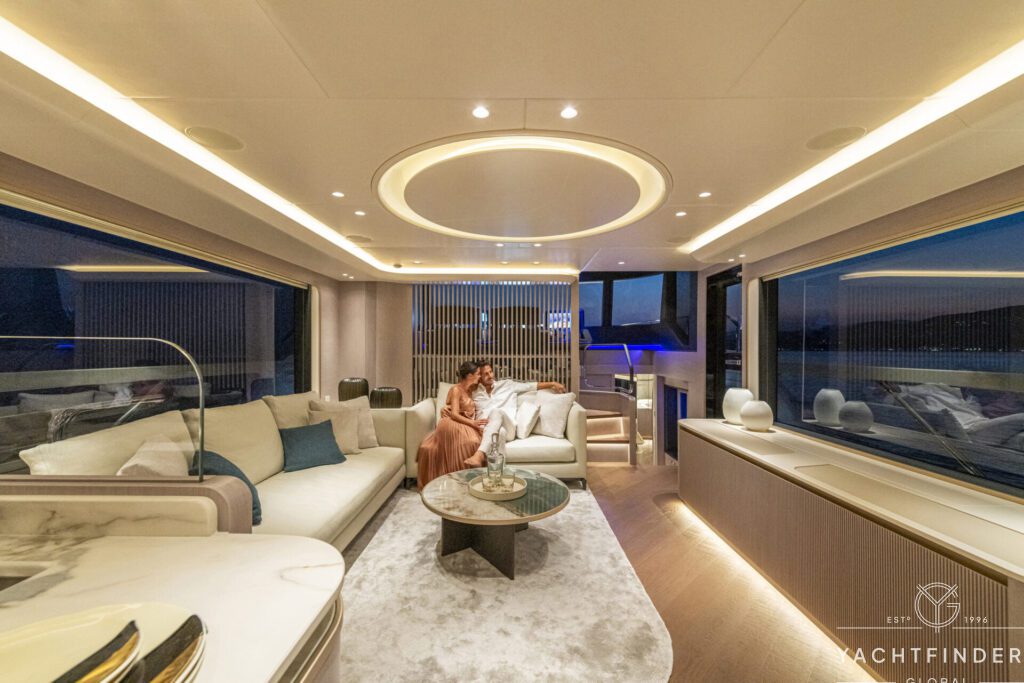
A few trends have pushed manufacturers in that direction:
- Automotive‑inspired styling — straight lines, hard corners, and “modern” minimalism photograph well.
- Cost and production efficiency — sharp edges are faster to fabricate in composite and joinery work.
- Showroom psychology — buyers often judge boats while standing still, not underway, so ergonomics get overlooked.
But as you know, the sea doesn’t care about aesthetics. A sharp corner at the wrong moment can mean stitches, bruises, or worse.
Why Absolute and Selene stand out
Both brands are known for seamanlike interiors rather than just stylish ones.
Absolute
- Uses radius corners on cabinetry and furniture.
- Prioritises flow and safety in movement paths.
- Often integrates soft transitions between materials.
Selene
- Classic ocean‑going philosophy: everything should be safe to grab, lean on, or bump into.
- Rounded teak joinery is part of their DNA.
- Built for long‑range cruising, where comfort and safety matter more than showroom flash.
It’s not just aesthetics — it’s a design philosophy rooted in real‑world use.
The bigger issue
What you’re noticing is part of a broader divide in the industry:
boats built for lifestyle marketing vs. boats built for actual seamanship with style.